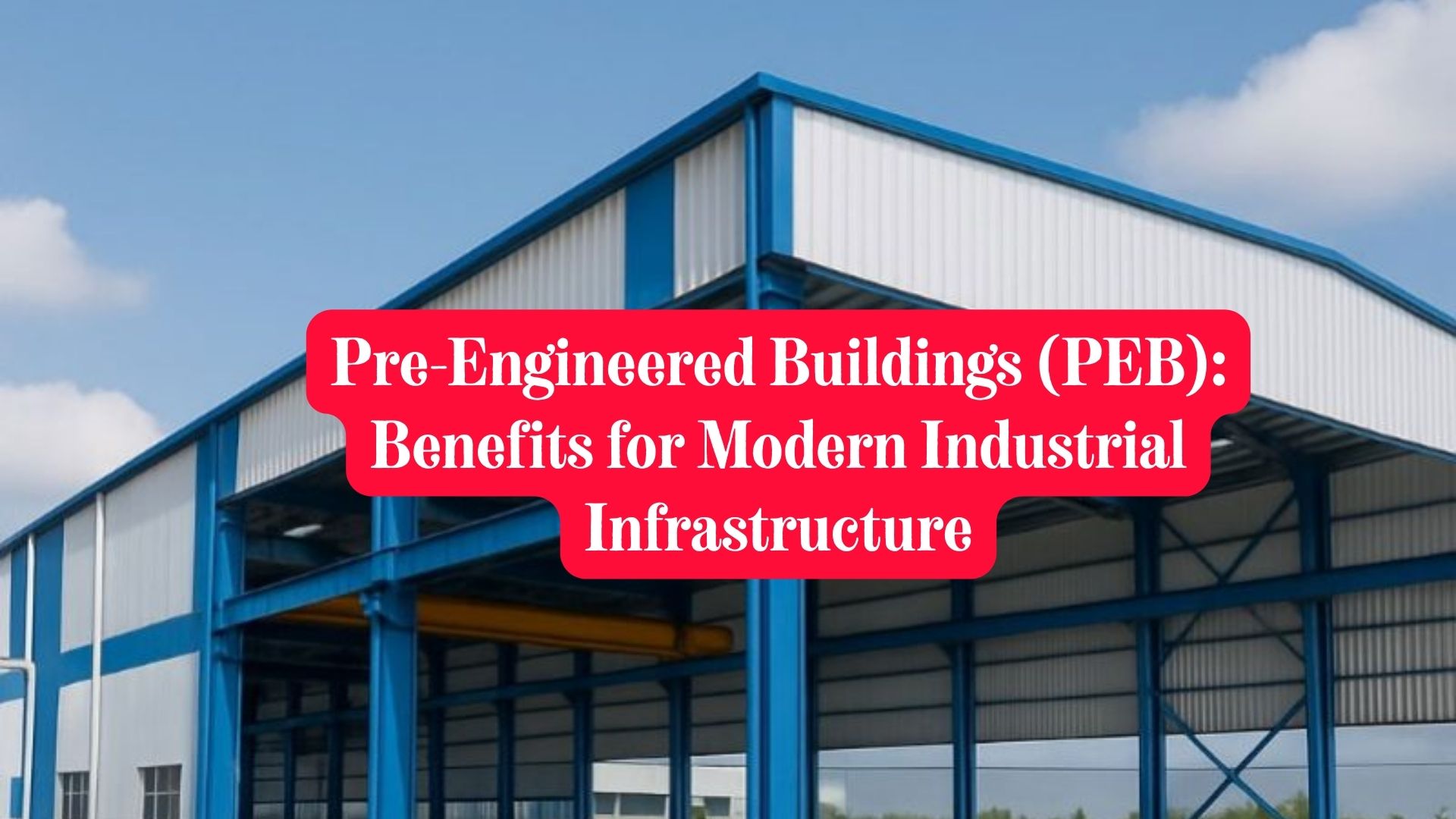
Pre-Engineered Buildings (PEB): Benefits for Modern Industrial Infrastructure
Introduction
In modern construction, Pre-Engineered Buildings (PEB) have become one of the most popular solutions for industrial infrastructure, warehouses, factories, and commercial buildings. Businesses today require buildings that are cost-effective, durable, fast to construct, and flexible in design. This is where PEB construction plays a major role. A Pre-Engineered Building is a structure that is designed and manufactured in a factory and then assembled at the construction site. These buildings use steel structures, prefabricated components, and advanced engineering techniques to deliver strong and efficient buildings. Because of their speed, efficiency, and cost savings, PEB structures are widely used in industrial construction projects across the world.
What Are Pre-Engineered Buildings (PEB)?
A Pre-Engineered Building (PEB) is a type of steel building system where structural components are designed, fabricated, and manufactured in a factory before being transported to the site for assembly.
The building components typically include:Unlike traditional construction, PEB structures reduce on-site work, making the construction process faster and more efficient.
Today, PEB buildings are widely used for industrial warehouses, manufacturing units, logistics centers, aircraft hangars, and commercial structures.
Why PEB Buildings Are Popular in Industrial Construction
The industrial construction industry increasingly prefers Pre-Engineered Buildings because they offer multiple advantages compared to conventional construction methods. PEB buildings provide faster project completion, lower construction costs, and high structural strength. These benefits make them ideal for industries that need large-span buildings with minimal internal columns.
Key Benefits of Pre-Engineered Buildings
Faster Construction TimeOne of the biggest advantages of PEB construction is speed. Since components are manufactured in a factory and delivered ready for installation, construction time is significantly reduced. Industrial projects that may take 12–18 months using traditional methods can often be completed in a few months with PEB structures.
Cost-Effective ConstructionPre-Engineered Buildings reduce overall construction costs because materials are optimized during the design stage. Factory fabrication also reduces material wastage and labor costs. For industries looking for affordable warehouse construction or factory buildings, PEB structures provide a highly economical solution.
High Structural StrengthPEB buildings are made primarily from high-strength steel, which offers excellent durability and load-bearing capacity. These structures can withstand heavy loads, harsh weather conditions, and seismic forces. Because of this strength, PEB systems are widely used in industrial infrastructure projects.
Flexible and Customizable DesignAnother advantage of PEB steel buildings is design flexibility. These buildings can be customized based on:
This flexibility makes PEB suitable for industrial warehouses, manufacturing units, logistics hubs, and storage facilities.
Low MaintenanceCompared to traditional concrete buildings, PEB structures require less maintenance. Steel components are designed to resist corrosion, rust, and structural damage when properly treated.This helps industries reduce long-term maintenance costs.
Environmentally FriendlyPEB construction is also considered eco-friendly. Steel materials used in these buildings are recyclable, and factory manufacturing minimizes construction waste. Many companies choose PEB buildings as part of sustainable construction practices.
Common Applications of PEB Buildings
Because of their advantages, Pre-Engineered Buildings are used in many industries. Some common applications include:
These applications show why PEB structures are becoming the preferred choice for industrial infrastructure development.
PEB vs Conventional Construction
When comparing PEB buildings with traditional concrete construction, several differences become clear. PEB structures offer faster construction, lower cost, lighter structural weight, and easier expansion options. Conventional buildings may require more materials, longer construction timelines, and higher labor costs. For large industrial projects, the advantages of steel PEB structures make them a highly efficient solution.
The Future of Pre-Engineered Buildings
As industries continue to expand, the demand for fast, durable, and scalable infrastructure will increase. Modern technologies such as advanced structural design software, automated steel fabrication, and smart building systems are making PEB construction even more efficient. Because of these innovations, Pre-Engineered Buildings are expected to dominate future industrial construction projects.
Conclusion
Pre-Engineered Buildings have transformed the way modern industrial structures are designed and built. With advantages such as faster construction, cost efficiency, strong structural performance, and flexible design, PEB buildings offer an ideal solution for today’s infrastructure needs. As industries continue to seek efficient and scalable building solutions, PEB construction will remain a key component of modern industrial development.