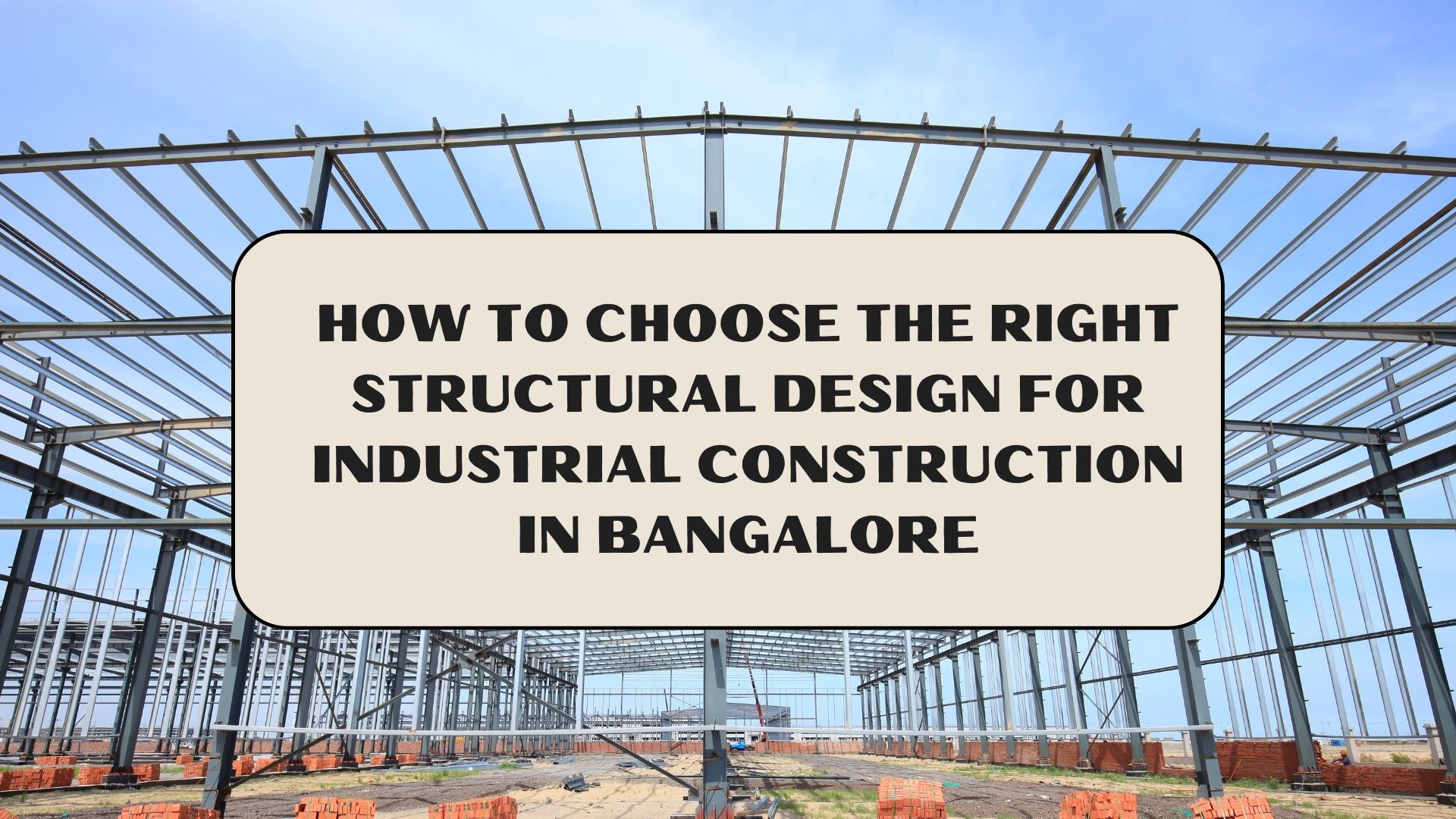
How to Choose the Right Structural Design for Industrial Construction in Bangalore
Bangalore is one of India’s fastest-growing industrial hubs, with rapid development in manufacturing units, warehouses, logistics parks, factories, and industrial sheds. Choosing the right structural design for industrial construction in Bangalore is critical to ensure safety, durability, cost efficiency, and long-term performance. A well-planned structural design not only supports heavy industrial loads but also complies with local regulations and environmental conditions.
Understand the Type of Industrial Building
The first step in selecting the right structural design is understanding the purpose of the industrial facility. Industrial buildings in Bangalore vary widely, including factories, PEB warehouses, production plants, cold storage units, and logistics centers. Each structure has different load requirements, clear span needs, crane loads, and functional layouts. Structural design must align with operational demands to avoid future modifications and unnecessary costs.
Consider Bangalore’s Soil and Environmental Conditions
Bangalore’s soil conditions differ across industrial areas such as Peenya, Bommasandra, Whitefield, and Nelamangala. Proper soil investigation and geotechnical analysis are essential before finalizing the foundation design. Structural design should account for soil bearing capacity, groundwater levels, and seismic considerations, ensuring stability and long-term safety of the industrial structure.
Choose the Right Structural System
Selecting the appropriate structural system is key to industrial construction success. Common options include reinforced concrete structures, steel structures, and pre-engineered buildings (PEB). PEB structures are highly popular in Bangalore due to faster construction, cost efficiency, and flexibility for expansion. For heavy-duty industrial plants, a combination of steel and RCC structural design may be ideal. The right choice depends on span length, load conditions, project timeline, and budget.
Focus on Load Requirements and Safety Standards
Industrial buildings carry heavy equipment, machinery, storage loads, and sometimes overhead cranes. Structural design must consider dead loads, live loads, wind loads, seismic forces, and crane loads as per Indian Standards (IS codes). Bangalore falls under Seismic Zone II, making earthquake-resistant structural design essential for industrial safety and compliance.
Ensure Compliance with Local Regulations
Industrial construction in Bangalore must follow BBMP, BDA, KIADB, and local authority guidelines, along with national building codes. Proper structural design documentation ensures smooth approvals and avoids legal or construction delays. Working with experienced professionals helps ensure designs meet all statutory and safety requirements.
Plan for Future Expansion and Flexibility
Industries in Bangalore often scale operations rapidly. A smart structural design allows future expansion, additional floors, extended bays, or increased load capacity without major reconstruction. Designing with modular systems and expansion-ready frameworks saves time and cost in the long run.
Optimize Cost Without Compromising Quality
Cost optimization is a major factor in industrial projects. Efficient structural design minimizes material usage while maintaining strength and durability. Advanced structural analysis software and value engineering techniques help reduce steel and concrete quantities, making the project economical without compromising safety.
Choose Experienced Structural Design Professionals
Selecting professionals with proven experience in industrial structural design in Bangalore ensures accurate planning, detailed analysis, and smooth coordination with architects and contractors. Expertise in industrial projects, PEB structures, and heavy-load design makes a significant difference in project success.
Emphasize Sustainability and Durability
Modern industrial construction emphasizes sustainability. Structural design should incorporate energy-efficient materials, corrosion-resistant steel, and durable construction practices suitable for Bangalore’s climate. Long-lasting structures reduce maintenance costs and improve operational efficiency.
Conclusion
Choosing the right structural design for industrial construction in Bangalore requires careful planning, technical expertise, and a clear understanding of industrial needs. A strong structural foundation ensures safety, efficiency, and scalability, supporting industrial growth in one of India’s most dynamic cities.