Introduction
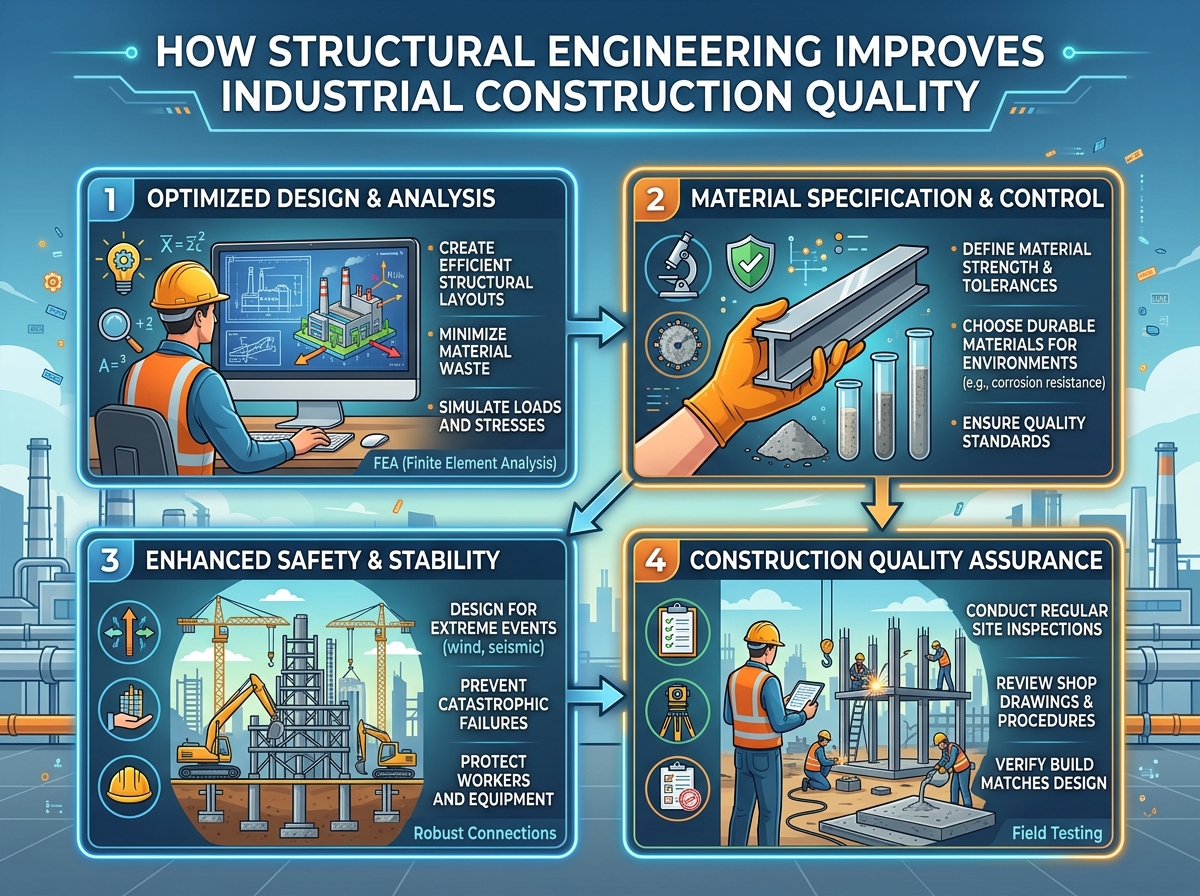
Industrial construction projects require strong planning, precision, and high-quality structural systems to ensure long-term performance and safety. Structural engineering plays a major role in improving the quality of industrial buildings by creating stable, durable, and efficient structures that meet modern engineering standards. From factories and warehouses to manufacturing plants and industrial infrastructure, structural engineering helps optimize construction quality while reducing risks and improving operational efficiency.
Importance of Structural Engineering in Industrial Construction
Structural engineering focuses on designing and analyzing buildings to ensure they can safely withstand loads, environmental conditions, and operational requirements. Industrial buildings often carry heavy machinery, equipment, storage loads, and production systems that require strong structural support.
Professional structural engineering ensures that industrial buildings are designed for maximum stability, durability, and functionality. Proper structural planning also minimizes construction errors and improves overall project performance.
Enhances Structural Safety
Safety is one of the most important aspects of industrial construction. Structural engineers carefully calculate load distribution, foundation strength, wind resistance, seismic performance, and material capacity to ensure building safety. Well-designed industrial structures reduce the risk of structural failure, cracks, instability, and operational hazards. Advanced engineering methods help create safe working environments for employees, machinery, and industrial operations. High-quality structural design also ensures compliance with engineering regulations and safety standards.
Improves Building Durability
Industrial facilities are exposed to heavy operational stress, environmental conditions, and continuous usage. Structural engineering improves the durability of buildings by selecting suitable materials, structural systems, and reinforcement methods. Steel structures, reinforced concrete systems, and modern industrial framing solutions increase building lifespan and reduce maintenance requirements. Durable industrial buildings provide long-term value and operational reliability. Proper structural engineering minimizes future repair costs and protects industrial investments.
Supports Efficient Space Utilization
Industrial operations require optimized layouts for machinery, storage, production lines, and workflow management. Structural engineering helps create large open-span spaces and flexible building layouts that improve operational efficiency. Steel structures and PEB systems allow column-free areas, making them ideal for warehouses, manufacturing units, logistics facilities, and industrial plants. Efficient space utilization improves productivity and supports future industrial expansion requirements.
Reduces Construction Errors and Delays
Accurate structural planning and engineering reduce design mistakes, material wastage, and construction delays. Structural engineers prepare detailed calculations, drawings, and technical specifications before construction begins. This organized approach improves coordination between architects, contractors, fabricators, and project managers. Better planning helps maintain project timelines and construction quality standards. Reduced rework and material loss also help control project costs effectively.
Improves Cost Efficiency
Structural engineering helps optimize material usage without compromising structural strength. Engineers design efficient structural systems that reduce unnecessary steel, concrete, and construction expenses. Modern structural analysis software and engineering techniques improve accuracy and reduce overall project costs. Efficient design planning also lowers maintenance and repair expenses over the building’s lifespan. Cost-effective structural solutions are especially important for large industrial construction projects.
Supports Modern Construction Technologies
Today’s industrial projects use advanced construction technologies such as Pre-Engineered Buildings (PEB), steel structures, and modular systems. Structural engineering plays a vital role in integrating these modern technologies into industrial construction.
PEB structures offer faster construction, flexibility, and high-quality performance for industrial applications. Structural engineers ensure proper load calculations, connection design, and overall system stability.
Modern structural solutions improve construction speed while maintaining high-quality standards.
Enhances Environmental Sustainability
Structural engineering also contributes to sustainable industrial construction. Efficient structural designs reduce material waste, energy usage, and environmental impact. Steel structures are recyclable and support eco-friendly construction practices. Optimized designs improve ventilation, natural lighting, and energy efficiency within industrial facilities. Sustainable construction methods help industries meet environmental standards and long-term operational goals.
Conclusion
Structural engineering is a key factor in improving industrial construction quality. From enhancing safety and durability to optimizing costs and supporting modern construction methods, structural engineering ensures reliable and high-performance industrial infrastructure.
Proper structural planning and professional engineering services help industries build stronger, safer, and more efficient facilities for long-term operational success.