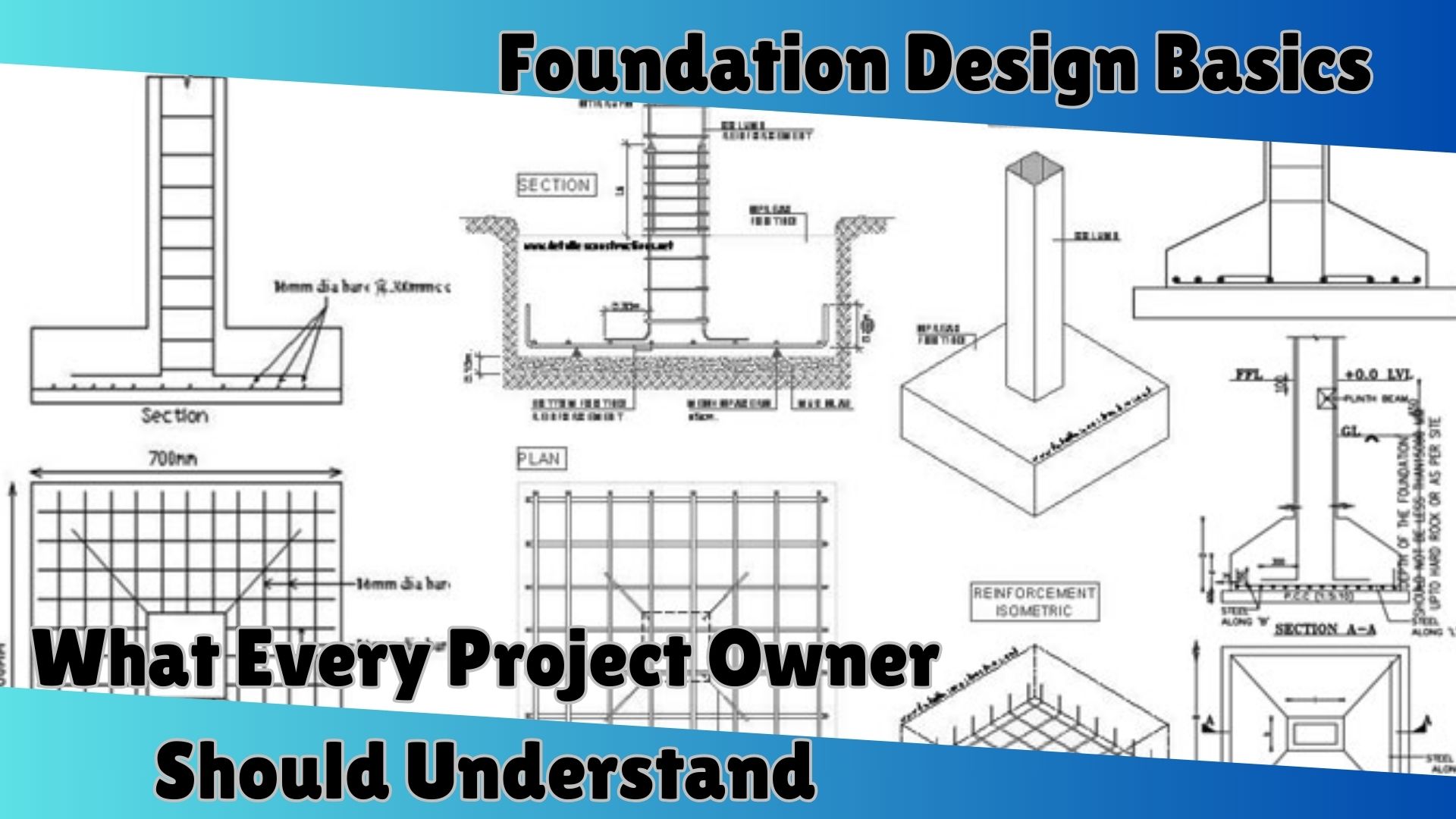
Foundation Design Basics: What Every Project Owner Should Understand
A foundation is the structural base that transfers building loads safely to the ground. Its performance determines the long-term stability, safety, and durability of the entire structure. Understanding how foundations function helps project owners make informed decisions, avoid costly mistakes, and ensure their building stands strong for decades.
Purpose of a Strong Foundation
The primary role of a foundation is to distribute structural loads evenly and prevent excessive settlement. A well-engineered foundation minimizes movement, resists environmental stresses, and provides resistance against sliding, overturning, and uplift forces. Without proper design, even the best superstructure can fail.
Understanding Soil Behavior
Soil is a living material that reacts differently under varying moisture, pressure, and environmental conditions. Its ability to support weight, drain water, and maintain strength directly influences foundation performance. Proper evaluation of soil characteristics is vital before finalizing any design approach.
Load Transfer Mechanism
Every building produces vertical and lateral forces. Foundations act as intermediaries, transferring these loads from columns and walls to the supporting ground. Effective load transfer ensures structural balance, prevents cracks, and protects the building from uneven movement.
Factors Influencing Foundation Design
Several technical and environmental aspects guide the design process. These include structural loads, ground conditions, site constraints, water table levels, seismic considerations, and long-term usage requirements. Ignoring any of these can compromise safety and increase maintenance costs.
Settlement and Stability Considerations
Minor ground movement is natural, but excessive or uneven settlement can damage structural elements. Foundation systems are planned to limit differential settlement, maintain alignment, and ensure the structure remains level and secure throughout its life cycle.
Importance of Drainage and Groundwater Control
Water significantly affects soil strength and stability. Proper drainage planning prevents erosion, pressure buildup, and weakening of support layers. Managing groundwater conditions is essential to maintaining foundation integrity.
Role of Safety Factors
Foundation engineering incorporates safety margins to account for uncertainties in soil properties, material behavior, and loading variations. These factors protect the structure against unexpected stresses and future changes.
Coordination with Structural Design
The foundation and superstructure must work together as a unified system. Early coordination between design teams ensures load paths are clear, material use is efficient, and construction proceeds without conflict or redesign.
Quality in Construction and Execution
Even the best design can underperform if construction practices are poor. Accuracy in excavation, reinforcement placement, material quality, and curing procedures directly affects final performance and durability.
Long-Term Performance and Maintenance Awareness
Foundations require minimal but crucial monitoring over time. Awareness of drainage, nearby developments, and changes in usage helps preserve stability and prevents hidden issues from escalating.
Conclusion
A clear understanding of foundation principles empowers project owners to participate confidently in decision-making. Sound planning, expert evaluation, and disciplined execution create a reliable base that ensures safety, longevity, and value for the entire project.